






In the world of technology and electrical engineering, the terms "modules" and "libraries" are often thrown around, sometimes interchangeably. However, as a module supplier, I've encountered numerous situations where the confusion between these two concepts can lead to misunderstandings and inefficiencies. In this blog post, I'll delve into the differences and similarities between modules and libraries, and also showcase the various types of modules we offer.
Understanding Modules
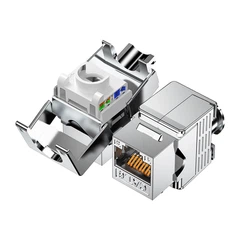
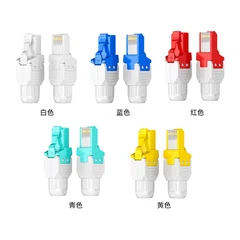
Let's start by defining what a module is. In a technical context, a module is a self - contained unit that performs a specific function. It is designed to be integrated into a larger system easily. For example, in the field of network cabling, a module can be a connector that is used to terminate cables. At our company, we offer a range of modules, such as the Category 5e Module, Category 6A Module, and Category 3 Module.
The Category 5e Module is a popular choice for Ethernet networks. It supports data transfer speeds of up to 1 Gigabit per second, making it suitable for most home and small - business networks. Its design ensures reliable signal transmission and is relatively easy to install.
The Category 6A Module, on the other hand, is a high - performance option. It can handle data rates of up to 10 Gigabits per second over a distance of up to 100 meters. This makes it ideal for large enterprises, data centers, and other environments where high - speed and high - bandwidth connections are crucial.
The Category 3 Module is an older standard. It is mainly used for telephone systems and some legacy data networks. While it may not offer the high - speed capabilities of the Category 5e or 6A modules, it still has its place in certain applications where cost - effectiveness and basic functionality are the primary concerns.
What are Libraries?
In contrast, a library is a collection of pre - written code, functions, or resources that can be reused in different projects. In software development, libraries are essential for saving time and effort. For example, a programming language like Python has a vast number of libraries for tasks such as data analysis (NumPy, Pandas), web development (Django, Flask), and machine learning (TensorFlow, PyTorch).
Libraries provide a set of tools and functions that developers can call upon without having to write the code from scratch. This modular approach to software development allows for faster development cycles and better code organization. For instance, if a developer wants to create a web application with user authentication, they can use a pre - built library instead of implementing the authentication system from the ground up.
Key Differences
One of the most significant differences between modules and libraries is their domain of use. Modules are typically hardware - related or refer to self - contained units in a physical system, while libraries are mainly associated with software.
Another difference lies in their purpose. Modules are designed to perform a specific physical or logical function within a system. They are often the building blocks of a larger infrastructure. Libraries, however, are focused on providing reusable code and resources to simplify the development process.
In terms of installation and integration, modules usually require physical installation, such as connecting a network module to a patch panel. Libraries, on the other hand, are installed in a software environment, often through package managers or by including the relevant code files in a project.
Similarities
Despite their differences, modules and libraries also share some similarities. Both are based on the principle of modularity. Modularity is a design concept that emphasizes breaking down a complex system into smaller, more manageable parts. This approach makes it easier to develop, test, and maintain the overall system.
Both modules and libraries can be updated independently. For example, if a new version of a network module with improved performance becomes available, it can be easily replaced in the existing system. Similarly, software libraries can be updated to fix bugs, add new features, or improve performance without having to rewrite the entire application.
Applications and Use Cases
In the real world, the applications of modules and libraries are vast. In the networking industry, modules are used to build and expand networks. They are crucial for ensuring reliable communication between different devices. For example, in a corporate office, network modules are used to connect computers, servers, and other network - enabled devices to the local area network (LAN).
In software development, libraries are used in almost every project. From mobile apps to large - scale enterprise systems, developers rely on libraries to speed up development and ensure the quality of their code. For example, a mobile game developer might use a physics library to simulate realistic movements and interactions within the game.
Our Role as a Module Supplier
As a module supplier, our goal is to provide high - quality modules that meet the diverse needs of our customers. We understand that different industries and applications have different requirements, which is why we offer a wide range of modules. We also provide technical support to ensure that our customers can install and use our modules correctly.
We stay up - to - date with the latest industry standards and technologies. This allows us to offer modules that are not only compatible with existing systems but also future - proof. For example, as the demand for higher - speed networks continues to grow, we are constantly researching and developing new modules that can meet these emerging needs.


Why Choose Our Modules?
Our modules are manufactured using high - quality materials and advanced manufacturing processes. This ensures their durability and reliability. We also conduct rigorous testing on all our products to ensure that they meet or exceed industry standards.
In addition to the quality of our products, we offer competitive pricing. We understand that cost is an important factor for our customers, especially in today's competitive market. By optimizing our production processes and supply chain, we are able to offer high - quality modules at a reasonable price.
Contact Us for Procurement
If you are in the market for high - quality network modules, we would love to hear from you. Whether you need a single Category 5e Module for a home network or a large quantity of Category 6A Modules for a data center project, we can provide the solutions you need.
We are committed to providing excellent customer service. Our team of experts is available to answer your questions, provide technical advice, and assist you with the procurement process. Contact us today to start a discussion about your module requirements.
References
- "Network Cabling Installation and Troubleshooting" by Andrew Tanenbaum
- "Python for Data Analysis" by Wes McKinney
- Industry standards documents from organizations such as the Telecommunications Industry Association (TIA)