





What This Cable Is
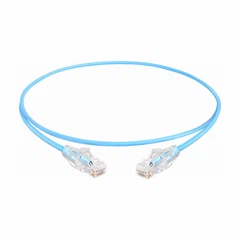
The cat6a patch cord is a finished Cat6a patch cable. It uses 23AWG stranded bare copper conductor with a 7/0.20mm structure. Compared with solid conductor, it is more flexible and resists bending better. It is good for cabinet front and patch panel scenes that need frequent handling. The shield structure is S/FTP. Each pair has individual aluminum foil. All pairs have an overall tinned copper braid. This gives enough anti-interference margin for 10G high-speed transmission. This product is a practical choice for 10G patching.
Where It Fits
Buyers first check the patching scene and plug frequency. This cat6a patch cord fits data center cabinet patch panel to switch 10G links. It fits cabinet front cable manager to server NIC connections. It fits short 10G links between cabinets. It fits high-performance workstation to network panel 10G connections. It also fits all 10G links that need frequent plugging and maintenance. This product works with all standard RJ45 ports. The table below shows the main fit points.
|
Compatibility Item |
Details |
|
Product Type |
Cat6a shielded patch cord |
|
Conductor Material |
Oxygen-free copper, purity ≥99.95% |
|
Conductor Size |
23AWG, 7/0.20mm stranded bare copper |
|
Shield Structure |
S/FTP, individual foil + overall braid |
|
Jacket Material |
Flexible flame-retardant PVC |
|
Connector Type |
RJ45, full metal shielded housing |
|
Gold Plating |
50μ" 3-prong |
|
Plug Life |
≥750 times |
|
Max Frequency |
500MHz |
|
Data Rate |
10Gbps |
|
Length Range |
1m to 30m, custom |
|
Package |
Individual PE bag + hook-and-loop tie |
Technical Specifications
The cat6a patch cord uses 23AWG stranded bare copper. The stranding process needs tighter pitch and tension control than solid conductor. We use servo tension control during stranding. This keeps the 7 copper strands at the same tension along the whole length. It avoids loose or tight strands that cause uneven resistance. The outer jacket uses flexible flame-retardant PVC. It feels soft. The minimum bend radius is only about 50% of solid cable. It routes around obstacles easily in a cabinet. Each product is tested with a Fluke DSX-8000 channel test and a TDR test. It meets Class EA across 500MHz. Standard stock lengths are 1m, 2m, 3m, 5m, 10m, 15m, 20m, and 30m.
|
Parameter |
Specification |
|
Product Type |
Cat6a shielded patch cord |
|
Conductor Material |
Oxygen-free copper, purity ≥99.95% |
|
Conductor Size |
23AWG, 7/0.20mm stranded bare copper |
|
Shield Structure |
S/FTP, individual foil + overall braid |
|
Jacket Material |
Flexible flame-retardant PVC |
|
Connector Type |
RJ45, full metal shielded housing |
|
Gold Plating |
50μ" 3-prong |
|
Plug Life |
≥750 times |
|
Characteristic Impedance |
100Ω ± 15Ω |
|
Max Frequency |
500MHz |
|
Data Rate |
10Gbps |
|
Minimum Bend Radius |
4x outer diameter in use |
|
Wiring Standard |
T568B, customizable T568A |
|
Standard |
TIA/EIA-568-C.2 |
|
Length Range |
1m to 30m, custom |
|
Package |
Individual PE bag + hook-and-loop tie |
How to Choose the Right Model
Buyers often need custom lengths and colors for the product. We support any length from 0.5m to 30m. Jacket colors come in 8 standard colors. Gold plating can be 50μ" or 30μ". The jacket can print your brand, length mark, and QR trace label. Package options include individual PE bag, coil with tie, or color box retail package. This product is a good choice for 10G cabinet patching. Samples ship in 7 working days. Bulk orders take 7 to 10 working days.
Quality Testing and OEM Support
We test each product with a Fluke DSX-8000 channel test and a TDR test. The product meets TIA/EIA-568-C.2 Class EA. A test report summary is included. We check conductor resistance, shield continuity, contact resistance, and 10G performance. For OEM orders, you can customize length, gold plating, color, print, and packaging. If you need a quote, send us your length, gold plating, color, and package type.
FAQ
Q1: Why does cat6a patch cord use stranded conductor instead of solid?
A1: Stranded conductor is much more flexible than solid. It has a smaller bend radius. It suits cabinet patch scenes that need repeated plugging and bending. Solid conductor can fatigue and break after repeated bending. So permanent links use solid, and patch cords use stranded. This is the standard practice in engineering.
Q2: How do I choose the right patch cord length?
A2: Measure the cable path between the two devices. Add routing slack at both ends, about 30cm each. Then add about 10% extra slack. Too long makes cable management hard. Too short puts tension on the plug contacts. We have many standard lengths and custom options. Send us your route distance and we will suggest the right length.