


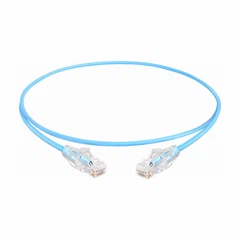
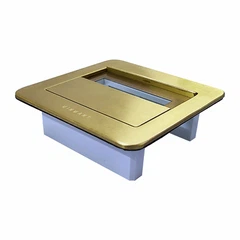
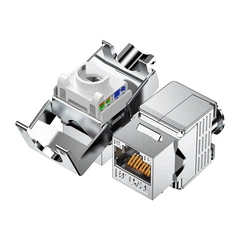
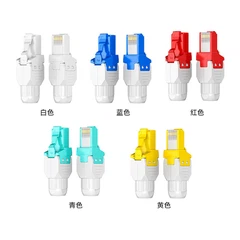

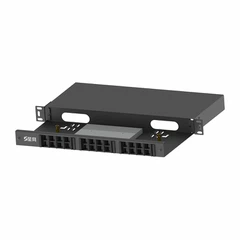

Fiber Optic Distribution Frame
Your Professional Fiber Optic Distribution Frame Supplier
Our goal is to become your reliable partner in the cable industry in China. Anhui Yingwang Technology Co., Ltd. specializes in the research, development, and manufacturing of a full range of products, including various network cables, low-voltage cables, and indoor optical cables. We are committed to applying advanced manufacturing technologies and strict quality control standards to every product. Our products are quality-assured, making us a dependable choice for long-term cooperation.


Why Choose Us
Our Certifications: We have obtained ISO 9001, ISO 14001, and ISO 45001 certifications, as well as one patent and one software copyright.
Production Equipment: We have advanced production equipment, including fiber dyeing machines, sheathing machines, rope filling machines, cable machines, core wire extruders, twisting machines, braiding machines, medium-sized wire drawing machines, small wire drawing machines, fine wire drawing machines, annealing machines, injection molding machines, copper stranding machines, etc.
Customized Solutions: We plan cabling systems according to our clients' project scenarios (e.g., office buildings, data centers) and provide customized solutions to help clients choose the right products.
Our Services: We offer 7x8 hour online service and respond within 2 hours of receiving a request. For malfunctions caused by quality issues within the warranty period, we provide free replacement or repair and reset the warranty period.
Advantages of Fiber Optic Distribution Frame
High bandwidth capacity: Fiber optics have much higher bandwidth capacity compared to copper cabling, enabling faster and more reliable data transfer.
Immunity to electromagnetic interference (EMI): Fiber optics are immune to EMI, which can cause signal degradation and data loss in copper-based networks.
Immunity to corrosion: Fiber optics are not susceptible to corrosion, unlike copper cables, making them ideal for use in harsh environments such as industrial settings or coastal regions.
Lightweight and flexible: Fiber optics are much lighter and more flexible than copper cables, making them easier to install and manage.
Longer transmission distances: Fiber optics can support longer transmission distances compared to copper-based networks, reducing the need for intermediate signal boosters.
Cost savings: Fiber optics can result in cost savings due to their durability, longer lifespan, and lower maintenance requirements compared to copper-based networks.
Increased security: Fiber optics are more secure than copper-based networks, as they are immune to tapping and do not emit electromagnetic radiation, making it difficult for unauthorized access or interception of data.
Specification of Fiber Optic Distribution Frame
|
Product name |
Fiber Optic Distribution Frame |
|
Compliance Standards |
Fully conforms to international standards including ANSI/TIA-568.3-D and ISO/IEC 11801 |
|
Construction Details |
Housing material: SPCC + ABS, combining structural rigidity and corrosion resistance for long-term stable use. |
|
Environmental Characteristics |
-20 °C to +60 °C (-4 °F to +140 °F) |

The rack-mount fiber optic patch panel supports full front-side operation and adopts a modular design, enabling fast and flexible deployment of optical pre-connection systems in high-density network environments.
It allows flexible configuration of LC/SC/FC/ST panels as needed, with the four types of interface panels installable simultaneously in one rack to meet diverse connection requirements of different devices. Crafted from premium eco-friendly materials, it strictly complies with REACH and RoHS environmental regulations, aligning with global sustainability standards.
Core Components of Fiber Optic Distribution Frame
Enclosure
The outer shell, typically made of cold-rolled steel, aluminum alloy, or flame-retardant plastic (for indoor use), provides the first line of defense.
Splicing Trays
These removable, compartmentalized trays house fiber splices (fusion or mechanical), protecting them from stress and contamination.
Adapter Panels
Mounted on the front or rear of the ODF, these panels hold fiber optic adapters (couplers) that connect terminated fibers to patch cords.
Entry/Exit Ports
Grommeted openings for fiber cables to enter/exit the ODF, preventing abrasion.
Cable Guides
Channels or hooks that route fibers from entry points to splicing trays or adapter panels, minimizing bends (critical for avoiding signal loss).
Slack Storage
Spacious areas to store excess fiber length, ensuring fibers aren’t stretched during maintenance.
Application of Fiber Optic Distribution Frame
Data Centers
They play a crucial role in managing high-capacity network systems.
Telecom Operators
ODFs organize optical cables in telecommunications networks.
Broadband Networks
They optimize fiber optic-based broadband network management.
Public and Private Sectors
ODFs enable organized cable management in large-scale network infrastructures.
Other Service of Fiber Optic Distribution Frame
|
Package |
Box |
|
Shipping |
Air/Sea/Express |
|
Payment |
T/T, Western Union, Paypal (For Sample Fee & Courier cost) |
FAQ
We're well-known as one of the leading fiber optic distribution frame manufacturers and suppliers in China, also support customized service and OEM&ODM service. Please feel free to wholesale high quality fiber optic distribution frame made in China here and get pricelist from our factory. For price consultation, contact us.
720 Port ODF Cabinet, MPO Pre Terminated Cassette, 8 Port Fiber Junction Box