


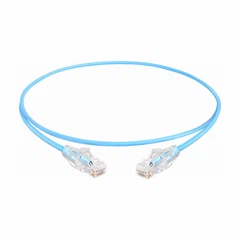
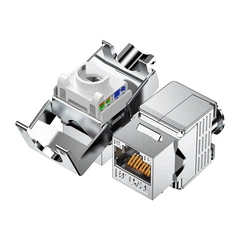


As a supplier of RJ45 connectors, I've been involved in various network - related projects and have witnessed both the benefits and limitations of using an RJ45 coupler. The RJ45 coupler, a simple yet useful device, has been an essential part of many network setups. However, it's crucial to understand its limitations to ensure optimal network performance.
Signal Degradation
One of the most significant limitations when using an RJ45 coupler is signal degradation. In any network, data is transmitted through electrical signals via the Ethernet cables and connectors. An RJ45 [coupler adds an extra connection point in the network chain. Each connection point, including the coupler, has the potential to introduce impedance mismatches, reflection, and attenuation of the electrical signals.
When we talk about impedance, it refers to the opposition that a circuit presents to the flow of an alternating current. Ethernet cables are designed to have a specific impedance, usually 100 ohms. An ideal connection should maintain this impedance throughout the network. However, when an RJ45 coupler is introduced, achieving a perfect impedance match can be challenging. Any impedance mismatch can cause signal reflection, where a portion of the transmitted signal bounces back instead of traveling forward. This reflected signal can interfere with the incoming signals, leading to data errors and slower transmission speeds [1].
Attenuation is another aspect of signal degradation. As the electrical signals travel through the cables and the coupler, they gradually lose strength. The longer the cable length and the more connection points, the more significant the attenuation. An RJ45 coupler, although small, still adds to this attenuation. In high - speed networks, such as Gigabit Ethernet or 10 Gigabit Ethernet, even a small amount of attenuation can have a substantial impact on the network performance. For example, in a Gigabit Ethernet network, a poorly designed or low - quality RJ45 coupler may cause the signal strength to drop below the acceptable level, resulting in packet loss and reduced network reliability.
Bandwidth Limitations
RJ45 couplers can also impose bandwidth limitations on a network. Bandwidth refers to the maximum amount of data that can be transmitted over a network in a given period. In modern network infrastructure, high - speed data transfer is crucial for various applications, such as video streaming, cloud computing, and online gaming.
The design and quality of an RJ45 coupler play a significant role in determining its bandwidth capabilities. Cheaper or lower - quality couplers may not be able to support high - bandwidth transmissions. For instance, a basic RJ45 coupler may be suitable for a 10/100 Mbps Ethernet network but may struggle to maintain the performance in a Gigabit Ethernet environment. In some cases, the coupler may act as a bottleneck, restricting the flow of data and preventing the network from achieving its full potential.
Even high - quality RJ45 couplers have their limits. While they can be designed to support higher bandwidths, factors such as signal degradation and interference can still reduce the effective bandwidth. For example, if a network is operating at a high frequency to achieve high - speed data transfer, the signal is more susceptible to interference and degradation. An RJ45 coupler may not be able to compensate for these effects fully, leading to a decrease in the available bandwidth.
Compatibility Issues
Compatibility is another limitation that needs to be considered when using an RJ45 coupler. The RJ45 connector system encompasses different standards and categories, such as Cat5, Cat5e, Cat6, and Cat6a. Each category is designed to support specific bandwidths and performance levels.
If an incompatible RJ45 coupler is used in a network, it can lead to significant problems. For example, using a Cat5 coupler in a Cat6 network may not allow the network to operate at its full Cat6 - rated speed. The coupler may not be able to handle the higher frequencies and electrical characteristics required for Cat6 performance, resulting in slower data transfer rates and potential data errors.
Moreover, there are also differences in the physical design of RJ45 connectors. Some RJ45 connectors may have a different pin configuration or a slightly different shape. If an RJ45 coupler is not designed to be compatible with these variations, it may not fit properly, leading to a poor electrical connection. This can further exacerbate signal degradation and other performance issues.
Environmental and Durability Concerns
The environment in which an RJ45 coupler is used can also pose limitations. In industrial or harsh environments, factors such as temperature, humidity, and dust can affect the performance and lifespan of the coupler.
High temperatures can cause the materials used in the RJ45 coupler to expand, which may lead to loose connections. Over time, this can result in intermittent signal loss or complete failure of the connection. On the other hand, low temperatures can make the plastic components brittle, increasing the risk of breakage.
Humidity can also be a problem. Moisture can corrode the metal contacts inside the RJ45 coupler, leading to poor electrical conductivity. Corroded contacts can cause increased resistance, which in turn can lead to signal degradation and data errors. In dusty environments, dust particles can accumulate inside the coupler, interfering with the electrical connections and causing short - circuits or other issues.
The durability of the RJ45 coupler is also a factor. Some lower - quality couplers may not be able to withstand repeated plugging and unplugging. The pins inside the coupler can become bent or damaged over time, which can affect the connection quality. In a network where cables are frequently moved or replaced, this can be a significant issue.
How to Mitigate These Limitations
Despite the limitations, there are ways to minimize their impact. When choosing an RJ45 coupler, it's essential to select high - quality products from reputable manufacturers. High - quality couplers are designed to have better impedance matching, lower attenuation, and higher bandwidth capabilities. They are also more likely to be compatible with different categories of RJ45 connectors.
Proper installation and maintenance are also crucial. Ensure that the coupler is properly seated and tightened on the cables to avoid loose connections. Regularly inspect the couplers for any signs of damage, such as bent pins or corrosion. In harsh environments, consider using protective enclosures or covers to shield the coupler from temperature, humidity, and dust.
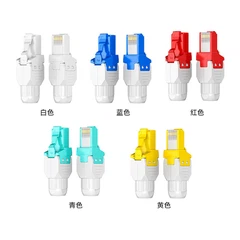
If you're in the process of setting up a network or looking to upgrade your existing one, you may need reliable RJ45 Connector and Modular RJ45 Plug. As a professional RJ45 connector supplier, we offer a wide range of high - quality products that can meet your various needs. Whether you're dealing with a small - scale home network or a large - scale enterprise network, we have the right solutions for you.


If you're interested in our products, we welcome you to contact us for procurement and further discussion. We're committed to providing excellent products and services to ensure the smooth operation of your network.
References
[1] Cisco Systems. "Ethernet Cabling Basics." Cisco Technical Marketing.