




In the ever - evolving landscape of networking technologies, the question of whether an RJ45 connector can be used for a fiber optic network is a topic that often sparks interest. As a supplier of RJ45 connectors, I've encountered this query numerous times from customers looking to optimize their network setups. In this blog, we'll delve into the technical aspects, advantages, limitations, and practical applications of using RJ45 connectors in fiber optic networks.
Understanding RJ45 Connectors and Fiber Optic Networks
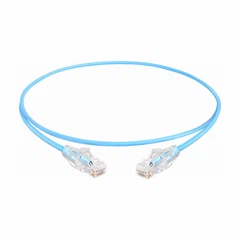
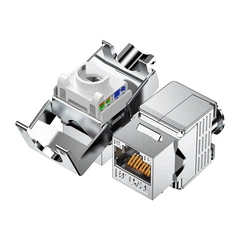
First, let's briefly understand what an RJ45 connector is. An RJ45 Connector is a standard type of connector commonly used for Ethernet networking. It has eight pins and is designed to work with twisted - pair cables, which are typically used for local area networks (LANs). These connectors are known for their simplicity, reliability, and widespread use in various networking applications.
On the other hand, fiber optic networks use thin strands of glass or plastic to transmit data as light signals. Fiber optic cables offer several advantages over traditional copper cables, including higher bandwidth, longer transmission distances, and immunity to electromagnetic interference.
Can RJ45 Connectors Be Used in Fiber Optic Networks?
The short answer is yes, but with some caveats. RJ45 connectors can be used in fiber optic networks, but not in a direct way. Since fiber optic cables transmit light, and RJ45 connectors are designed for electrical signals in copper cables, an interface device is required to bridge the gap.
One common solution is to use media converters. A media converter is a device that can convert the electrical signals used in RJ45 - based copper networks to optical signals for fiber optic cables, and vice versa. These converters typically have an RJ45 port on one side and a fiber optic port on the other. This allows you to connect a device with an RJ45 interface, such as a computer or a switch, to a fiber optic network.
Advantages of Using RJ45 Connectors in Fiber Optic Networks
Compatibility
One of the main advantages is compatibility. Many existing networking devices, such as computers, routers, and switches, are equipped with RJ45 interfaces. By using media converters, these devices can be easily integrated into a fiber optic network without the need for extensive hardware upgrades. This is especially beneficial for businesses that want to gradually transition from copper - based networks to fiber optic networks.
Cost - Effectiveness
In some cases, using RJ45 connectors in fiber optic networks can be more cost - effective. Instead of replacing all the RJ45 - equipped devices with fiber - optic - compatible ones, businesses can simply invest in media converters. This can significantly reduce the upfront cost of upgrading to a fiber optic network.
Ease of Installation
RJ45 connectors are relatively easy to install compared to some fiber optic connectors. Many technicians are already familiar with the process of terminating RJ45 connectors on copper cables. With the use of media converters, the installation process becomes even more straightforward, as it combines the simplicity of RJ45 connectors with the benefits of fiber optic technology.


Limitations of Using RJ45 Connectors in Fiber Optic Networks
Bandwidth Limitations
While fiber optic cables can support extremely high bandwidths, the RJ45 connectors themselves may have limitations. The maximum bandwidth supported by an RJ45 connector depends on the category of the cable it is used with. For example, Cat5e cables typically support up to 1 Gbps, while Cat6 and Cat6a cables can support up to 10 Gbps. If you need to take full advantage of the high - speed capabilities of fiber optic networks, you may need to use higher - category cables or consider alternative connector types.
Distance Limitations
RJ45 - based copper cables have distance limitations. The maximum distance for Ethernet over copper is typically around 100 meters. In contrast, fiber optic cables can transmit data over much longer distances, sometimes up to several kilometers. When using RJ45 connectors in a fiber optic network, the distance limitation of the copper cable between the device and the media converter needs to be taken into account.
Practical Applications
Office Networks
In office environments, many devices such as computers, printers, and IP phones are equipped with RJ45 interfaces. By using media converters, these devices can be connected to a fiber optic backbone network, providing high - speed and reliable connectivity. This is especially useful for large offices where multiple devices need to be connected over a relatively large area.
Data Centers
Data centers require high - speed and reliable networking to support the large amount of data traffic. While many data center equipment is now designed with fiber optic interfaces, there may still be some legacy devices with RJ45 interfaces. Using RJ45 connectors in combination with media converters allows these legacy devices to be integrated into the fiber optic network, ensuring seamless operation and compatibility.
Conclusion
In conclusion, an RJ45 connector can indeed be used for a fiber optic network, but it requires the use of media converters to bridge the gap between the electrical signals of the RJ45 connector and the optical signals of the fiber optic cable. This approach offers several advantages, including compatibility, cost - effectiveness, and ease of installation. However, it also has some limitations, such as bandwidth and distance limitations.
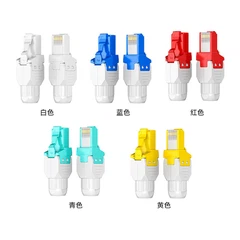
If you're considering using RJ45 connectors in your fiber optic network, or if you're in the market for high - quality Modular RJ45 Plug and other RJ45 connectors, we'd be happy to assist you. Our team of experts can provide you with the right solutions and advice to meet your networking needs. Contact us to start a procurement discussion and take your network to the next level.
References
- Ethernet Standards: IEEE 802.3
- Fiber Optic Technology: ITU - T G.652, G.655
- Networking Equipment Manufacturers' Documentation