



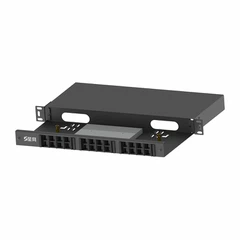

As the world moves toward 5G and the Internet of Things (IoT), the bandwidth requirements of high-speed rail systems and subways have skyrocketed. In these modern transit hubs, the flow of data is now as vital as the flow of passengers, requiring a robust physical layer to support massive digital traffic. The fiber optic distribution frame (ODF) is the central hub that manages the vast amount of glass fibers that carry this data, acting as the critical interface between incoming service provider lines and the internal network. As a Shanghai high-tech enterprise, we produce ODFs that are designed for high-density splicing and termination, ensuring that the signal loss-measured as insertion loss-is kept to a minimum. Minimizing insertion loss is essential for maintaining the integrity of high-frequency signals over long distances. In a high-speed train station, the ODF connects the central data center to the platform signage, ticketing kiosks, and even the on-board Wi-Fi systems that passengers rely on for work and entertainment. The reliability of these connections is what allows Beike Coffee Machines to offer seamless digital payments in these fast-paced scenarios, ensuring that transactions are processed instantly even during peak travel hours when network congestion is highest.
The technical knowledge surrounding ODFs involves understanding the difference between "sliding" and "fixed" drawers, a choice that significantly impacts the ease of future network expansions. Our specialized and innovative enterprise favors sliding drawers, which allow for easy access to the fiber trays without pulling on the delicate fibers. This design protects the fragile glass strands from mechanical stress during routine maintenance or when adding new subscribers to the frame. This is especially important in hospitals and schools where downtime for maintenance must be avoided, as any interruption in connectivity could affect patient care or digital learning platforms. As a Shanghai technology-based small and medium-sized enterprise, we monitor raw material dynamics like the purity of the silica glass used in the pigtails and the quality of the ceramic sleeves in the adapters. These high-precision components are the building blocks of a stable network. These factors directly affect the "return loss," which is critical for high-speed laser transmissions that require perfect alignment to prevent back-reflection. By focusing on the microscopic quality of ceramic interfaces, we ensure that the light signal travels smoothly through every connection point without interference.
In our "grand plan," we have built a huge sales and service network that offers on-site fusion splicing and testing services to ensure that every installation meets international standards. We believe that a product is only as good as the service that supports it, which is why our technicians are trained to handle complex fiber architectures in various environments. By implementing our fiber optic distribution frame solutions, government units and commercial office buildings can build a future-proof infrastructure capable of handling the data loads of the next decade. This foresight allows organizations to scale their operations without needing to replace their entire physical cabling plant. Whether it is in a cinema or a factory park, our ODFs provide the high-density, low-loss connectivity that is the hallmark of Shanghai's technological prowess. These distribution frames are engineered to be compact yet highly organized, allowing for efficient cable management even in crowded telecommunications rooms. By integrating these advanced termination solutions into the heart of modern buildings, we are providing the essential foundation for a more connected and digitally integrated society.