


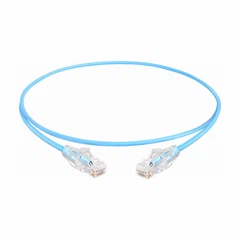
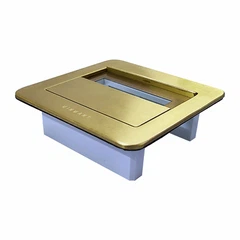
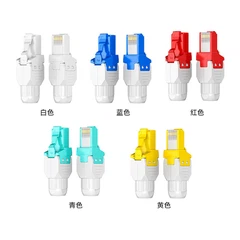


As an RJ45 connector supplier deeply entrenched in the networking industry, I often encounter customers and enthusiasts posing the intriguing question: "Can I use an RJ45 wall jack for both in - wall and surface - mount applications?" This query is not only common but also relevant, considering the diverse needs of network installations in modern settings. In this blog post, I aim to delve into this topic comprehensively, shedding light on the technical aspects, advantages, and limitations of using an RJ45 wall jack for both scenarios.
Understanding RJ45 Wall Jacks
RJ45 wall jacks are essential components in Ethernet networking. They provide a standardized interface for connecting network devices, such as computers, routers, and switches, to the wired network infrastructure. These jacks are designed to terminate Ethernet cables, typically Category 5e (Cat5e), Category 6 (Cat6), or Category 6a (Cat6a), ensuring reliable data transmission.
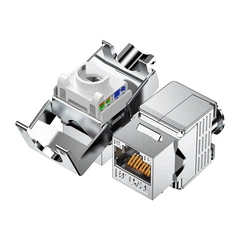
The basic structure of an RJ45 wall jack consists of a housing, insulation displacement connectors (IDCs) for terminating the wires, and a mating interface for the Modular RJ45 Plug. The IDCs are crucial as they make electrical contact with the cable conductors without the need for stripping the insulation, which simplifies the installation process.
In - Wall Applications
In - wall installations are a common practice in both residential and commercial buildings. The primary goal of an in - wall installation is to create a clean and organized network infrastructure by hiding the cables within the walls. RJ45 wall jacks are typically installed in wall boxes, which are recessed into the wall. This not only provides a neat appearance but also protects the cables and connectors from physical damage.


When using an RJ45 wall jack for in - wall applications, several factors need to be considered. First and foremost, the wall jack must comply with the relevant electrical and building codes. This ensures the safety of the installation and prevents potential hazards, such as electrical fires. Additionally, the wall jack should be rated for the type of cable being used. For example, if you are using a Cat6 cable, the wall jack should be a Cat6 - rated jack to maintain the performance of the network.
Another important consideration is the termination process. In - wall installations require careful cable management and proper termination to ensure reliable data transmission. The cables should be neatly routed through the wall cavities and terminated at the wall jacks using the correct termination techniques. Improper termination can lead to signal loss, crosstalk, and other network issues.
Surface - Mount Applications
Surface - mount applications, on the other hand, are more flexible and are often used in situations where in - wall installation is not feasible or desirable. Surface - mount RJ45 wall jacks can be installed on desks, walls, or other flat surfaces using screws or adhesive mounts. This makes them suitable for temporary or semi - permanent network setups, such as in home offices or small businesses.
One of the main advantages of surface - mount applications is the ease of installation. Unlike in - wall installations, there is no need to cut into the walls or run cables through wall cavities. This can save time and money, especially in situations where quick setup is required. Additionally, surface - mount wall jacks can be easily repositioned or removed if needed, providing greater flexibility.
However, surface - mount wall jacks are more exposed to physical damage compared to in - wall installations. They are also more likely to be affected by environmental factors, such as dust and moisture. Therefore, it is important to choose a wall jack that is durable and has proper protection against these elements.
Can I Use an RJ45 Wall Jack for Both?
The short answer is yes, in many cases, an RJ45 wall jack can be used for both in - wall and surface - mount applications. Most modern RJ45 wall jacks are designed to be versatile and can be installed in different ways. However, there are some factors that you need to consider before using a wall jack for both applications.
Compatibility
First, make sure that the wall jack is compatible with the mounting method you plan to use. Some wall jacks come with specific mounting options, such as a bracket for in - wall installation or a surface - mount plate. If the wall jack is not designed for a particular mounting method, it may not fit properly or may not provide a secure connection.
Performance
The performance of the wall jack is also important. In - wall installations may require a higher level of shielding to protect against electromagnetic interference (EMI) and radio frequency interference (RFI). If you plan to use the same wall jack for both in - wall and surface - mount applications, make sure it has adequate shielding to maintain the performance of the network in both scenarios.
Aesthetics
Aesthetics can also play a role in your decision. In - wall installations are generally more aesthetically pleasing as they hide the cables and connectors. If you are concerned about the appearance of your network setup, you may want to choose a wall jack that is designed to blend in with the surrounding environment.
Advantages of Using a Single Wall Jack for Both Applications
Using a single RJ45 wall jack for both in - wall and surface - mount applications offers several advantages. First, it reduces the need to purchase different types of wall jacks, which can save money. Second, it simplifies the inventory management process, as you only need to stock one type of wall jack. Third, it provides greater flexibility in network installations, allowing you to easily switch between in - wall and surface - mount setups as needed.
Limitations and Considerations
While using a single wall jack for both applications is possible, there are some limitations and considerations. As mentioned earlier, surface - mount wall jacks are more exposed to physical damage and environmental factors. If you plan to use the wall jack in a harsh environment or in a location where it may be easily knocked or bumped, you may need to take additional precautions to protect it.
Additionally, in - wall installations may require more advanced installation techniques and tools. If you are not experienced in in - wall wiring, it may be advisable to hire a professional installer to ensure the installation is done correctly.
Conclusion
In conclusion, an RJ45 wall jack can often be used for both in - wall and surface - mount applications. However, it is important to consider factors such as compatibility, performance, and aesthetics before making a decision. As an RJ45 Connector supplier, we offer a wide range of high - quality RJ45 wall jacks that are designed to be versatile and reliable. Whether you are looking for a wall jack for in - wall or surface - mount applications, we have the solution for you.
If you are interested in purchasing RJ45 wall jacks or have any questions about our products, please feel free to contact us. Our team of experts is always ready to assist you with your networking needs and guide you through the procurement process. We look forward to the opportunity to work with you and help you build a robust and efficient network infrastructure.
References
- "Ethernet Cabling and Connectivity Standards," IEEE Standards Association.
- "Network Cabling Installation Best Practices," BICSI.
- "RJ45 Connector Technology and Applications," TechTarget.