





Hey there! I'm a module supplier, and I often get asked about how to import a module in PHP. It's a topic that many developers, especially those new to PHP, find a bit confusing. So, I thought I'd share some insights on this process based on my experience in the module business.


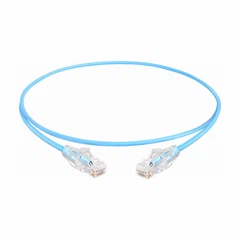
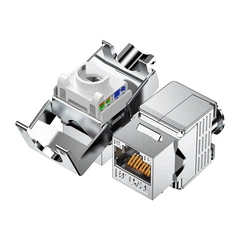
First off, let's understand what a module is in the context of PHP. A module in PHP can be a set of functions, classes, or variables that are grouped together to perform a specific task. It helps in organizing your code, making it more modular and easier to maintain. As a module supplier, I offer a range of modules, like the Category 6 Module, Category 6A Module, and Category 5e Module. These modules are designed to meet different needs in various PHP projects.
Different Ways to Import a Module in PHP
1. Using include and require Statements
The most basic way to import a module in PHP is by using the include and require statements. These statements are used to insert the content of one PHP file into another.
The include statement will include and evaluate the specified file. If the file is not found, it will generate a warning, but the script will continue to run. Here's an example:
<?php
include 'my_module.php';
// Now you can use functions or classes from my_module.php
my_function();
?>
On the other hand, the require statement is similar, but if the file is not found, it will generate a fatal error, and the script will stop executing.
<?php
require 'my_module.php';
// Use functions or classes from my_module.php
my_function();
?>
The difference between include and require is crucial. If you want your script to continue even if the module is missing (maybe for testing purposes or if the module is optional), use include. But if the module is essential for your script to work, use require.
2. Using include_once and require_once
Sometimes, you might accidentally include the same module multiple times, which can lead to errors like function redefinition. To avoid this, you can use include_once and require_once. These statements work the same as include and require, but they will only include the file once, even if you try to include it multiple times.
<?php
include_once 'my_module.php';
// Even if you try to include it again, it won't be included
include_once 'my_module.php';
?>
3. Autoloading Classes
If your module consists of classes, you can use autoloading to automatically load the classes when they are needed. PHP provides a way to define an autoload function that will be called whenever a class is used but not yet defined.
<?php
spl_autoload_register(function ($class_name) {
    include $class_name . '.php';
});

// Now you can use the class without explicitly including the file
$object = new MyClass();
?>
This method is very useful when you have a large number of classes in your module, as it saves you from having to include each class file manually.
Considerations When Importing Modules
1. File Paths
When using include or require statements, you need to be careful with the file paths. If the module file is in a different directory than the main script, you need to specify the correct path. You can use relative or absolute paths.
Relative paths are relative to the current working directory of the script. For example, if your module file is in a subdirectory named modules, you can use:
<?php
include 'modules/my_module.php';
?>
Absolute paths are the full path to the file on the server. You can use the __DIR__ constant to get the directory of the current script and then build the absolute path.
<?php
include __DIR__ . '/modules/my_module.php';
?>
2. Error Handling
As mentioned earlier, include and require can generate different types of errors. It's important to handle these errors properly. You can use try-catch blocks if you are using PHP 7 or later to catch any exceptions that might occur during the inclusion process.
<?php
try {
    require 'my_module.php';
} catch (Exception $e) {
    echo 'Error: ' . $e->getMessage();
}
?>
Why Choose Our Modules?
As a module supplier, I take pride in offering high-quality modules. Our Category 6 Module, Category 6A Module, and Category 5e Module are designed to be efficient, reliable, and easy to integrate into your PHP projects.
Our modules are thoroughly tested to ensure they work seamlessly with different PHP versions and server environments. We also provide detailed documentation and support to help you with the installation and usage of our modules.
Contact Us for Procurement
If you're interested in purchasing our modules or have any questions about importing them in your PHP projects, don't hesitate to reach out. We're here to assist you in finding the right module for your needs and guiding you through the integration process.
References
- PHP Manual: https://www.php.net/manual/en/
- PHP Autoloading: https://www.php.net/manual/en/language.oop5.autoload.php