



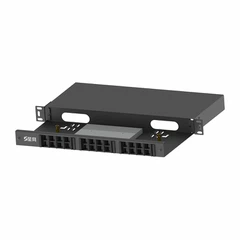

As a seasoned supplier in the fiber optic jumper industry, I've witnessed firsthand the rapid evolution and diversification of these essential components in the telecommunications and data networking fields. Fiber optic jumpers are short fiber optic cables terminated with connectors at both ends, used to connect different devices in a fiber optic network. They play a crucial role in ensuring high - speed, reliable data transmission. In this blog, I'll delve into the various types of fiber optic jumpers available in the market.
Single - Mode vs. Multi - Mode Fiber Optic Jumpers
Before exploring specific connector types, it's important to understand the difference between single - mode and multi - mode fiber optic jumpers.
Single - mode fiber optic jumpers are designed to carry a single ray of light (mode) directly down the core. They have a very small core diameter (usually 9 microns), which allows for long - distance transmission with minimal signal loss. These jumpers are ideal for applications such as long - haul telecommunications, data centers with large - scale storage area networks (SANs), and high - speed internet backbones. The low attenuation and high bandwidth characteristics of single - mode fiber make it suitable for transmitting data over distances of several kilometers without significant degradation.
On the other hand, multi - mode fiber optic jumpers can carry multiple light rays (modes) simultaneously through the core. They have a larger core diameter (commonly 50 or 62.5 microns), which makes them more cost - effective to manufacture and easier to connect. However, multi - mode fiber is limited in terms of transmission distance due to dispersion, where different light modes travel at different speeds and arrive at the receiver at different times. Multi - mode fiber is typically used for short - distance applications like local area networks (LANs), campus networks, and in - building connections.
Connector Types of Fiber Optic Jumpers
The type of connector used in a fiber optic jumper significantly impacts its performance, compatibility, and ease of use. Here are some of the most common connector types:
LC Connector
The LC (Lucent Connector) is a small - form - factor connector that has gained widespread popularity in recent years. It is a push - pull type connector, which means it can be easily plugged and unplugged without the need for any tools. The LC connector has a 1.25mm ferrule, which is half the size of the traditional SC connector, allowing for higher port density on networking equipment.
LC To LC Fiber Jumper is a common configuration, often used in high - density data centers, fiber - to - the - desktop (FTTD) applications, and telecommunications equipment. The LC connectors provide excellent optical performance with low insertion loss and high return loss, ensuring reliable data transmission.
SC Connector
The SC (Subscriber Connector) is a widely used connector in fiber optic networks. It is a push - pull connector with a 2.5mm ferrule. The SC connector is known for its simplicity, durability, and ease of installation. It is commonly used in LANs, CATV systems, and telecommunications networks.
SC connectors are available in both single - mode and multi - mode versions. An SC To LC Fiber Jumper Cable is often used when connecting equipment with different connector types. For example, it can be used to connect an SC - terminated patch panel to an LC - terminated network interface card.
FC Connector
The FC (Ferrule Connector) is a screw - type connector with a 2.5mm ferrule. It was one of the first connectors used in fiber optic networks and is still widely used in some applications, especially in high - precision and high - reliability environments such as military and aerospace applications.


The FC connector provides a secure connection due to its screw - on design, which helps to prevent accidental disconnection. Fc To Lc Patch Cord is useful when integrating older FC - based equipment with newer LC - based systems.
ST Connector
The ST (Straight Tip) connector is a bayonet - style connector with a 2.5mm ferrule. It was one of the earliest fiber optic connectors and is still used in some legacy systems. The ST connector is easy to install and provides a relatively secure connection. However, it is more prone to damage from improper handling compared to some of the newer connector types.
Other Specialized Fiber Optic Jumper Types
MPO/MTP Connectors
MPO (Multi - Fiber Push - On) and MTP (a registered trademark of US Conec) connectors are high - density connectors that can accommodate multiple fibers in a single connector. They are commonly used in data centers for high - speed, high - density applications such as 40G and 100G Ethernet. MPO/MTP connectors can have different fiber counts, such as 12, 24, or even 72 fibers, allowing for a significant increase in port density.
E2000 Connector
The E2000 connector is a high - performance, dust - proof connector. It has a shutter mechanism that protects the ferrule from dust and dirt when the connector is not in use, reducing the risk of signal loss due to contamination. The E2000 connector is often used in harsh environments where dust and debris are a concern.
Choosing the Right Fiber Optic Jumper
When selecting a fiber optic jumper for your application, several factors need to be considered. First, determine whether single - mode or multi - mode fiber is required based on the transmission distance and bandwidth requirements. If you need to transmit data over long distances, single - mode fiber is the better choice. For short - distance, high - density applications, multi - mode fiber may be more suitable.
Second, consider the connector type. Make sure the connector type is compatible with the equipment you are using. For example, most modern data center equipment uses LC connectors, while some legacy systems may still use SC or ST connectors.
Finally, pay attention to the quality of the fiber optic jumper. Look for jumpers that are manufactured to industry standards and have been tested for optical performance, including insertion loss and return loss.
Why Choose Our Fiber Optic Jumpers
As a professional fiber optic jumper supplier, we are committed to providing high - quality products at competitive prices. Our fiber optic jumpers are manufactured using the latest technology and the highest quality materials. We have a strict quality control system in place to ensure that every jumper meets or exceeds industry standards.
We offer a wide range of fiber optic jumpers, including different connector types, fiber modes, and cable lengths. Whether you need a simple LC to LC fiber jumper for your data center or a specialized MPO/MTP connector for high - speed networking, we have the right solution for you.
If you are in the market for fiber optic jumpers, we invite you to contact us for a detailed discussion about your requirements. Our team of experts is ready to assist you in choosing the most suitable products for your application. We look forward to the opportunity to work with you and contribute to the success of your fiber optic network projects.
References
- "Fiber Optic Communication Systems," G. P. Agrawal.
- "Optical Fiber Telecommunications VI," edited by I. P. Kaminow, T. Li, and A. E. Willner.