



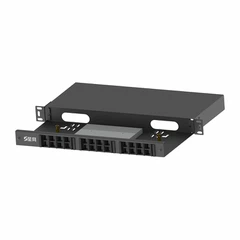

In the digital age, data centers stand as the backbone of modern information technology, facilitating the storage, processing, and transfer of vast amounts of data. At the heart of these data centers lies a critical component: fiber optic jumpers. As a leading supplier of fiber optic jumpers, I am excited to delve into the role of these essential components in data centers and explore how they contribute to the seamless operation of these technological powerhouses.
The Basics of Fiber Optic Jumpers
Fiber optic jumpers are short fiber optic cables with connectors on both ends, used to connect different network devices within a data center. They are designed to transmit data at high speeds over long distances with minimal signal loss, making them ideal for use in data center environments where reliability and performance are paramount.
There are several types of fiber optic jumpers available, each with its own unique characteristics and applications. Some of the most common types include Fc To Lc Patch Cord, Sc To Sc Fiber Cable, and LC To LC Fiber Jumper. These jumpers are available in different lengths, fiber types (single-mode or multi-mode), and connector types to meet the specific needs of data center applications.
The Role of Fiber Optic Jumpers in Data Centers
High-Speed Data Transmission
One of the primary roles of fiber optic jumpers in data centers is to enable high-speed data transmission. Fiber optic cables use light to transmit data, which allows for much higher data transfer rates compared to traditional copper cables. This is especially important in data centers, where large amounts of data need to be transferred quickly and efficiently between servers, storage systems, and network switches.
For example, in a large data center, fiber optic jumpers can be used to connect servers to storage area networks (SANs) or to connect different network switches within the data center. These jumpers can support data transfer rates of up to 100 Gbps or more, ensuring that data can be transferred quickly and reliably.
Low Signal Loss
Another important role of fiber optic jumpers is to minimize signal loss during data transmission. Fiber optic cables are made of glass or plastic fibers that are designed to carry light signals over long distances with minimal attenuation. This means that data can be transmitted over longer distances without the need for signal boosters or repeaters, which can simplify the design and operation of data centers.
In addition, fiber optic jumpers are less susceptible to electromagnetic interference (EMI) and radio frequency interference (RFI) compared to copper cables. This makes them ideal for use in data centers, where there may be a lot of electrical noise from other equipment.
Flexibility and Scalability
Fiber optic jumpers offer a high degree of flexibility and scalability, which is essential in data centers. They can be easily installed and reconfigured to meet the changing needs of the data center. For example, if a new server needs to be added to the data center, a fiber optic jumper can be quickly installed to connect the server to the network.
In addition, fiber optic jumpers can be used to create redundant paths in the data center, which can improve the reliability and availability of the network. If one path fails, the data can be automatically rerouted through another path, ensuring that there is no disruption to the network.


Space Saving
Fiber optic jumpers are much thinner and lighter than copper cables, which makes them ideal for use in data centers where space is limited. They can be easily routed through cable trays and racks, taking up less space compared to copper cables. This can help to reduce the overall footprint of the data center and make it more efficient.
The Importance of Quality Fiber Optic Jumpers
In a data center environment, the quality of the fiber optic jumpers is crucial. Poor quality jumpers can lead to signal loss, data errors, and network downtime, which can have a significant impact on the performance and reliability of the data center.
As a fiber optic jumper supplier, we understand the importance of providing high-quality products. Our fiber optic jumpers are manufactured using the latest technology and materials to ensure optimal performance and reliability. We also conduct rigorous testing on all of our products to ensure that they meet or exceed industry standards.
Conclusion
In conclusion, fiber optic jumpers play a critical role in the operation of data centers. They enable high-speed data transmission, minimize signal loss, offer flexibility and scalability, and save space. As a fiber optic jumper supplier, we are committed to providing high-quality products that meet the needs of our customers. If you are looking for reliable fiber optic jumpers for your data center, please contact us to discuss your requirements. We look forward to working with you to help you build a more efficient and reliable data center.
References
- "Fiber Optic Cables: A Comprehensive Guide." TechTarget.
- "Data Center Cabling Best Practices." Cisco.
- "Fiber Optic Connector Types and Their Applications." The Fiber Optic Association.