



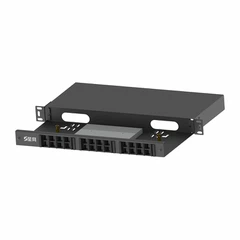

In the fast - paced world of network management, every little tool and component plays a crucial role. One such unsung hero is the blank patch panel. As a supplier of blank patch panels, I've seen firsthand how these simple yet powerful devices can transform the way networks are managed.
What Exactly is a Blank Patch Panel?
A blank patch panel is, as the name suggests, a panel with no pre - installed ports or connectors. It's a clean slate, a canvas for network administrators to customize and configure according to their specific needs. Think of it as a Lego set for your network. You can add the ports and connectors you want, whether it's for Ethernet, fiber optic, or other types of network connections.
Flexibility in Network Design
One of the biggest advantages of a blank patch panel is its flexibility. In a dynamic network environment, requirements can change rapidly. New devices are added, old ones are removed, and network topologies are adjusted. With a blank patch panel, you're not locked into a pre - defined configuration. You can easily add or remove ports as needed.
For example, if you initially set up a network for a small office with a limited number of devices, but then your business grows and you need to connect more computers, printers, and servers, a blank patch panel allows you to make those changes without having to replace the entire panel. You can simply add the necessary ports and connectors, saving time and money.
Easier Cable Management
Cable management is a nightmare for many network administrators. A jumbled mess of cables can lead to signal interference, downtime, and difficulty in troubleshooting. Blank patch panels help in this regard by providing a structured way to organize cables.
You can label each port on the panel, making it clear which cable is connected to which device. This not only makes it easier to identify and trace cables but also reduces the risk of accidental disconnections. Additionally, you can use cable management accessories like cable ties and raceways to keep the cables neat and tidy.


Cost - Effective Solution
When it comes to network infrastructure, cost is always a consideration. Blank patch panels are a cost - effective option compared to pre - configured panels. Since you only add the ports and connectors you need, you don't have to pay for features or ports that you won't use.
For instance, if you only need a few Ethernet ports for a home network, you can purchase a blank patch panel and add just the required number of Ethernet ports. This is much more economical than buying a pre - configured panel with a large number of ports that you'll never utilize.
Compatibility with Different Network Standards
Blank patch panels are highly compatible with various network standards. Whether you're working with Category 3 Patch Panel, Category 6 Patch Panel, or Category 6A Patch Panel, you can easily adapt the blank panel to meet your specific requirements.
This compatibility ensures that your network can keep up with the latest technological advancements. As new network standards emerge, you can upgrade the ports and connectors on the blank patch panel to support these standards, without having to replace the entire panel.
Simplified Troubleshooting
In a network, problems can arise at any time. When an issue occurs, quick and efficient troubleshooting is essential to minimize downtime. Blank patch panels make troubleshooting easier.
Since the cables are neatly organized and labeled, it's easier to identify the source of the problem. You can quickly check the connections on the panel, isolate the faulty cable or port, and make the necessary repairs. This reduces the time it takes to get the network up and running again.
Scalability
As your business grows, your network needs to grow with it. Blank patch panels offer excellent scalability. You can start with a small number of ports and gradually add more as your network expands.
This scalability is particularly beneficial for startups and small businesses. They can start with a basic network configuration and then upgrade as they acquire more devices and users. It allows them to invest in network infrastructure gradually, without over - committing financially.
Customization for Specific Applications
Different industries and applications have different network requirements. A blank patch panel allows you to customize the panel to meet these specific needs.
For example, in a data center, you may need a high - density patch panel with a large number of ports to handle a large volume of data traffic. On the other hand, in a home network, you may only need a few ports for basic internet connectivity. With a blank patch panel, you can design the panel to fit your specific application.
Long - Term Investment
A blank patch panel is a long - term investment in your network infrastructure. It can adapt to changes in technology and business requirements over time. Instead of having to replace the entire panel every few years, you can simply upgrade the ports and connectors as needed.
This long - term viability makes it a smart choice for businesses of all sizes. It provides a stable and reliable foundation for your network, ensuring that your network can continue to function effectively as your business evolves.
How to Choose the Right Blank Patch Panel
When choosing a blank patch panel, there are a few factors to consider. First, think about the number of ports you need. This will depend on the size and complexity of your network. You also need to consider the type of ports, such as Ethernet, fiber optic, or coaxial.
Another important factor is the build quality. A high - quality panel will be more durable and reliable. Look for panels made from sturdy materials that can withstand the rigors of daily use.
Conclusion
In conclusion, a blank patch panel is an invaluable tool in network management. It offers flexibility, ease of cable management, cost - effectiveness, compatibility, and scalability. Whether you're a small business owner, a home user, or a large enterprise, a blank patch panel can help you manage your network more efficiently.
If you're interested in learning more about our blank patch panels or are ready to make a purchase, feel free to reach out. We're here to help you find the perfect solution for your network needs.
References
- Network Cabling Installation Best Practices, Industry Standard Publications
- Guide to Network Infrastructure Management, Professional Network Management Journals